








MSI Is A Global Association Of Over 250 Independent Legal And Accounting Firms In More Than 100 Countries. MSI Has A Successful Track Record Of More Than 25 Years And The Firm Has Recently Been Selected To Represent Mumbai, India.
Please Click Here To See MSI’s Info Graphic Which Highlights Key Facts Of The About. With The Membership At MSI, The Firm Has Now Access To 253 Legal And Accounting Firms Worldwide For Its Clients Who Desire To Do Cross Border Transactions Across The World.
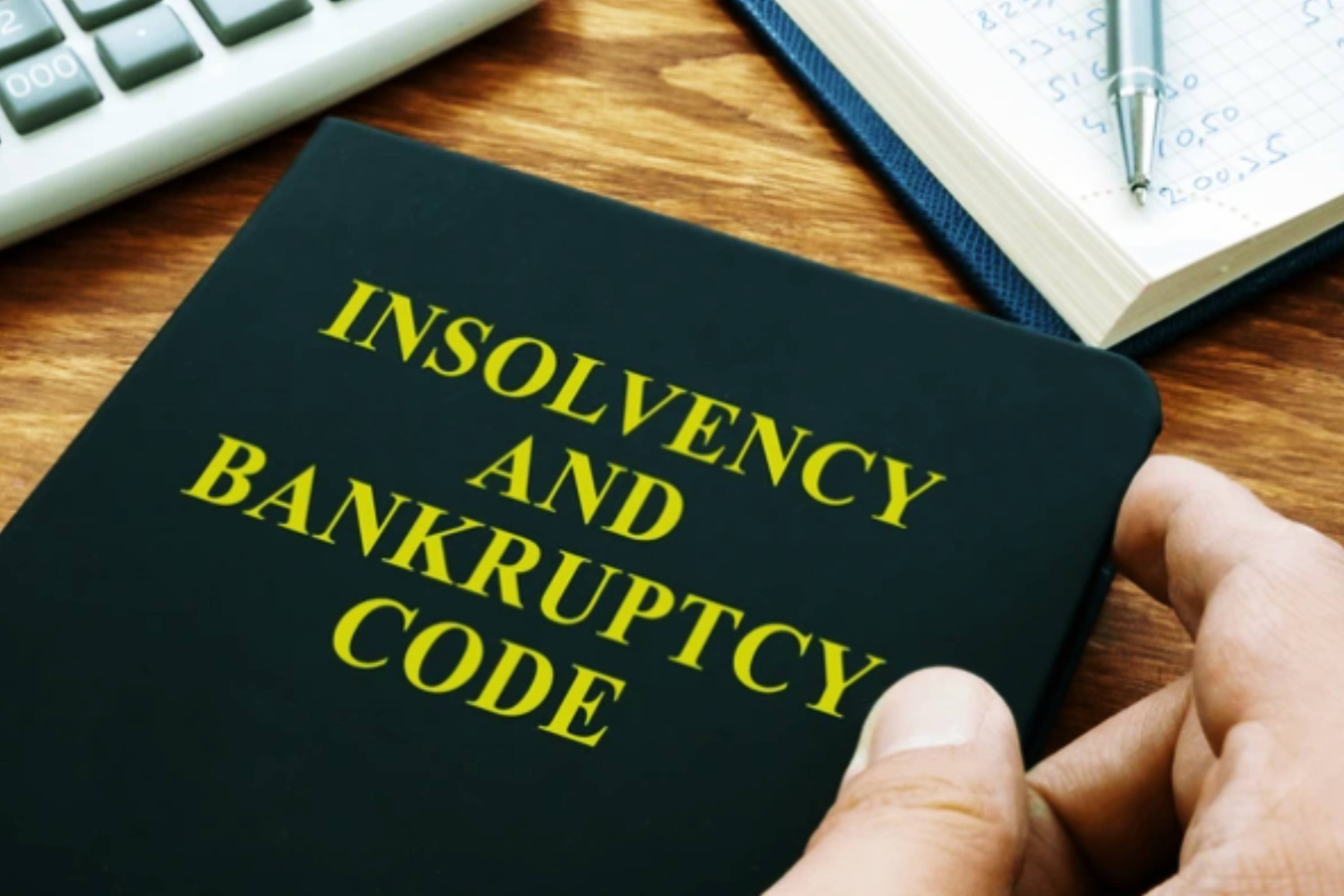
THE INSOLVENCY AND BANKRUPTCY CODE (AMENDMENT) ACT, 2026

THE INSOLVENCY AND BANKRUPTCY CODE (AMENDMENT) ACT, 2026
Contributors:
Akash Jain, Associate Partner
Sanjana Salvi, Associate
The Lok Sabha on 12 August 2025 had introduced the Insolvency and Bankruptcy (Amendment) Bill, 2025 which signified a crucial advancement in India's continuous endeavour to fortify its insolvency and restructuring ecosystem. The Bill was introduced in response to both practical insights gained since the original enactment of the Insolvency and Bankruptcy Code, 2016 (IBC) and the evolution of international best practices, the IBC Amendment Bill 2025 is intended to address longstanding challenges and close critical loopholes that have affected the efficiency, fairness and predictability of the Insolvency and Bankruptcy Code, 2016 (“IBC”). On 6th April 2026 the Insolvency and Bankruptcy (Amendment) Act, 2026 came into force thereby implementing the amendment bill.
Background:
The IBC from the time of its enactment has significantly strengthened credit discipline and recovery mechanisms. However, persistent challenges, particularly delays in admission and resolution, litigation hurdles, and value erosion of stressed assets necessitated legislative intervention.
The Insolvency and Bankruptcy Code (Amendment) Act, 2026 (“IBC amendment Act”) introduces wide-ranging structural and procedural reforms aimed at improving efficiency, predictability, and stakeholder confidence. The IBC amended act pays particular attention to issues flagged by courts and practitioners, the complexities arising in group and cross-border insolvency, and the misuse of withdrawal and moratorium provisions by promoters and other stakeholders.
Key Amendments:
1. Strict Timelines
The amendments ensure that each form must be filed within stipulated timelines (generally within 10 days of the relevant event or reporting period), ensuring contemporaneous disclosures.
2. Mandatory Admission of Application
The Adjudicating Authority (“AA”) is now required to admit an application within fourteen days of receipt, upon satisfaction of the existence of default and compliance with statutory requirements. In cases of rejection or delay beyond the stipulated period, the AA must record reasons in writing. This amendment ensures consistency, transparency, and expeditious commencement of insolvency proceedings. Under the new amended provision, the Adjudicating Authority (AA) shall within a period of 14 days of receipt of the application, admit applications on satisfaction of default and compliance with Insolvency Bankruptcy Code 2016 (“IBC”). The AA can reject the application in case the requirements are not met and must record the reason in writing for delay beyond 14 days.
3. Interim Resolution
Amendment to section 10 restricts the Corporate debtors from nominating the IRP, reducing risk of bias or undue influence. A restriction is also imposed on the AA to record the delay in writing for not passing an order within a period of 14 days.
4. Withdrawal Restrictions
Amendment to section 12 provides for a Post-admission withdrawal of insolvency applications permitted only after constitution of the Committee of Creditors (“CoC”) and requires approval of 90% voting share.
Withdrawal is prohibited after the invitation of resolution plans and must be disposed of within thirty days.
5. Clarification of Moratorium
As per amendment to section 14, subrogation rights of corporate/surety guarantors cannot be enforced against the corporate debtor during the moratorium period in CIRP. Guarantors cannot ask the company to pay them back if they cover any of its debts until the insolvency process is over.
6. Supervisory power to CoC to oversee liquidation
Amendment to section 21 provides for supervisory power to the CoC to supervise the conduct of the liquidator in the process of the liquidation and the board may appoint class or classes of creditors to attend meetings of creditors
7. Transfer of guarantor assets into CIRP
The CoC is vested with supervisory authority over the conduct of the liquidator during liquidation proceedings. The Board may also permit representation of specific classes of creditors in such oversight mechanisms.
8. Minimum payout for dissenting creditors
As per amendment of section 30, the Bill stipulates that a resolution plan must ensure that a dissenting financial creditor receives an amount not less than the lower of the amount– (i) the liquidation value of such creditor or (ii) its entitlement under the resolution plan based on the liquidation waterfall mechanism.
9. Two-stage approval for resolution plan
Amendment to section 31 ensure that on an application filed by the resolution professional (RP), the AA can initially approve the implementation plan for handing over and managing the business of the corporate debtor and then, the AA separately approves distribution to stakeholders within a 30-day window. The amendment also proposes to clarify that once AA approves the resolution plan, the company gets a fresh start (i.e. a clean slate) meaning all old claims against the company are extinguished, except those specifically allowed to continue.
10. Notice to the CoC for rejection of Resolution Plan
Amendment to section 31 requires the AA to give a notice to the CoC to rectify any defects in the resolution plan before rejecting the same.
11. Liquidation and Corporate Insolvency Resolution Process (CIRP) Restorative Reform
As per amendment to section 33-36, 38-42, 54, Moratorium expanded to cover all proceedings during liquidation; allows restoration of CIRP from liquidation (one time, up to 120 days, under exceptional circumstances with 66% CoC voting)
12. Role of CoC in liquidation
Amendment to section 35,36,38-4 enhances the CoC’s role in the insolvency of a corporate debtor, it is proposed that the CoC oversee the liquidation process, similar to the CIRP, possibly including other creditors as non-voting members, unlike the current framework where the liquidator consults a stakeholder consultation committee without being bound by its advice. Decisions such as replacement of liquidator, action against fraud shall require 66 %approval of the CoC.
13. Fixed liquidation timelines
Amendment to Sections 35, 36, 38–42, 54 enforces that the Liquidation must be completed in 180 days, with only one extension (maximum 90 days). Per amendment to section 33, the AA is required to pass a liquidation order within a period of 30 days from the date of receipt of intimation or application to initiate liquidation process.
14. Expanded look-back periods for avoidance transaction investigations
Amendment to Sections 43, 46, 47, 49, 50 has widened the period for reviewing suspicious or wrongful transactions (such as preferential, undervalued or fraudulent transfers). Earlier, this review period was counted only from the date the insolvency process was formally admitted. Now, the look-back period can also cover the time before admission starting from when the insolvency application is filed. Creditors (not just RP/liquidator) may apply for avoidance actions if RP/liquidator fails; related-party asset transfers lose safe harbour.
15. Secured creditor decision timelines
Amendment to Section 52–53 entails that if secured creditors want to realise assets outside liquidation, they must decide within 14 days; in case more than one secured creditor has any security interest over assets of the corporate debtor, no secured creditor shall be entitled to release its security interest unless the same is agreed upon by secured creditor representing 66 % of the value of claims of security interest;
16. Redefining security interest
Per amendment to section 53 clarifies that where the value of the security interest relinquished by the secured creditor is less than the total debt owed to such secured creditor by the corporate debtor, he shall be a secured creditor to the extent of the value of such security interest, determined in such manner as may be specified, and for the remaining value of such debt, he shall be considered to be an unsecured creditor Security interest shall only exist if it creates a right, title, interest or a claim to a property pursuant to an agreement or arrangement only and not merely through operation of law. The clarification ensures that secured creditors’ rights over company assets are protected and take precedence, promoting greater clarity and confidence
17. Pre-packaged insolvency harmonisation
The amendment to Sections 54C, 54F, 54L, 54N sets clear rules for pre-packaged insolvency by using the same definitions and procedures as the regular insolvency process. It updates how pre-pack insolvency starts, when the moratorium applies, how resolution plans get approved and how cases can be withdrawn;
18. Creditor initiated insolvency resolution process
Amendment to section 58 K Allows creditors to initiate insolvency for genuine business failures, including an out-of-court mechanism. The amendment provides for procedural discipline, with initiation needing the support of creditors representing a specified threshold (i.e. 51%) of outstanding debt. The process is to be concluded within 150 days, with a possible extension for a period of 45 days.
19. Group insolvency framework
Amendment to add Chapter VA whereby the IBC Amendment Bill, 2025 proposes to bring in processes for simultaneous resolution of group companies under common management or ownership. Includes coordination between group entities, common bench and possibility for a shared resolution professional. Designed to address complex corporate structures and value erosion arising from piecemeal resolutions
20. Cross-border insolvency framework
Amendment to section 240 proposes to provide a structure drawing on UNCITRAL Model Law principles for a cross-border insolvency framework. Government is empowered to make rules, designate special benches and adapt laws. The framework lays the legal foundation for effective cooperation and coordination between Indian and foreign insolvency proceedings there by to facilitates quicker and more effective recovery of overseas assets, aligning Indian law with global best practices and Increases global investor confidence and asset recovery certainty
MHCO Comment
The Insolvency and Bankruptcy Code (Amendment) Act, 2026 introduces significant reforms to strengthen India’s insolvency framework by addressing delays, litigation hurdles, and value erosion. It mandates stricter timelines, ensures faster admission of insolvency applications, limits withdrawal after initiation, and enhances the role of the Committee of Creditors (CoC), especially during liquidation. The Bill also introduces provisions for group and cross-border insolvency, expands scrutiny of fraudulent transactions, and clarifies creditor rights. Overall, the amendment aims to improve efficiency, transparency, and investor confidence while aligning India’s insolvency regime with global best practices.
The views expressed in this update are personal and should not be construed as legal advice. Please contact us for any assistance.
This update was released on 13 Apr 2026.
The views expressed in this update are personal and should not be construed as any legal advice. Please contact us directly on +91 22 40565252 or contact@mhcolaw.com for any assistance.
Legal Update Team
MANSUKHLAL HIRALAL & COMPANY
Advocates, Solicitors and Notaries
T: +91 22 40565252
Mumbai Office: Surya Mahal, 2nd Floor, 5, Burjorji Bharucha Marg, Fort, Mumbai-400 023, India
Delhi Office: Block C-9, Lower Ground Floor, Jangpura Extension, New Delhi - 110 014, India
www.mhcolaw.com
"Noted lawyer in the Real Estate practitioner from India" - Chambers & Partners
Please consider the environment before printing this email
The information contained in this communication is intended solely for the use of the individual or entity to whom it is addressed and others authorized to receive it. This communication may contain confidential or legally privileged information. If you are not the intended recipient, any disclosure, copying, distribution or action taken relying on the contents is prohibited and may be unlawful. If you have received this communication in error, or if you or your employer does not consent to email messages of this kind, please notify the sender immediately by responding to this email and then delete it from your system. No liability is accepted for any harm that may be caused to your systems or data by this message.
Subscribe to our Knowledge Repository
If you would like to receive content directly in your inbox from our knowledge repository, please complete this subscription form.
OUR CLIENTS







MEDIA COVERAGES
AWARDS & RECOGNITION









AFFILIATIONS & ASSOCIATIONS

MEMBERS OF MSI GLOBAL ALLIANCE

MEMBERS OF ILF
International Law Firms (ILF) Is An International Association Of Independent Smaller And Mid-Sized Law Firms Serving Their Clients’ Needs In Cross Border Business Legal Issues. Our Association With ILF Enables Us To Effectively Assist Clients With Trans-National Legal Issues At Effective Prices.
LIFE AT MHCO













PRACTICE AREA
Private Limited Company Registration in India
Setting up a Company in India
Foreign Direct Investment (FDI) in India
Foreign Business Registration in India
Small Business Registration in India
GET IN TOUCH
Mumbai: Surya Mahal, 2nd Floor 5, Burjorji Bharcha Marg Fort, Mumbai-400 023 India
Contact No.: T: +91-22-40565252
E: contact@mhcolaw.com
Delhi: C-9, Lower Ground Floor Jangpura Extension, New Delhi-110 0014 India
Contact No.: T: +91-11-40196496
E: contact@mhcolaw.com
Contact No.: T: +91-22-40565252
E: contact@mhcolaw.com
Delhi: C-9, Lower Ground Floor Jangpura Extension, New Delhi-110 0014 India
Contact No.: T: +91-11-40196496
E: contact@mhcolaw.com
2025 - MANSUKHLAL HIRALAL & CO.
Need Help? Chat with us