











MSI Is A Global Association Of Over 250 Independent Legal And Accounting Firms In More Than 100 Countries. MSI Has A Successful Track Record Of More Than 25 Years And The Firm Has Recently Been Selected To Represent Mumbai, India.
Please Click Here To See MSI’s Info Graphic Which Highlights Key Facts Of The About. With The Membership At MSI, The Firm Has Now Access To 253 Legal And Accounting Firms Worldwide For Its Clients Who Desire To Do Cross Border Transactions Across The World.
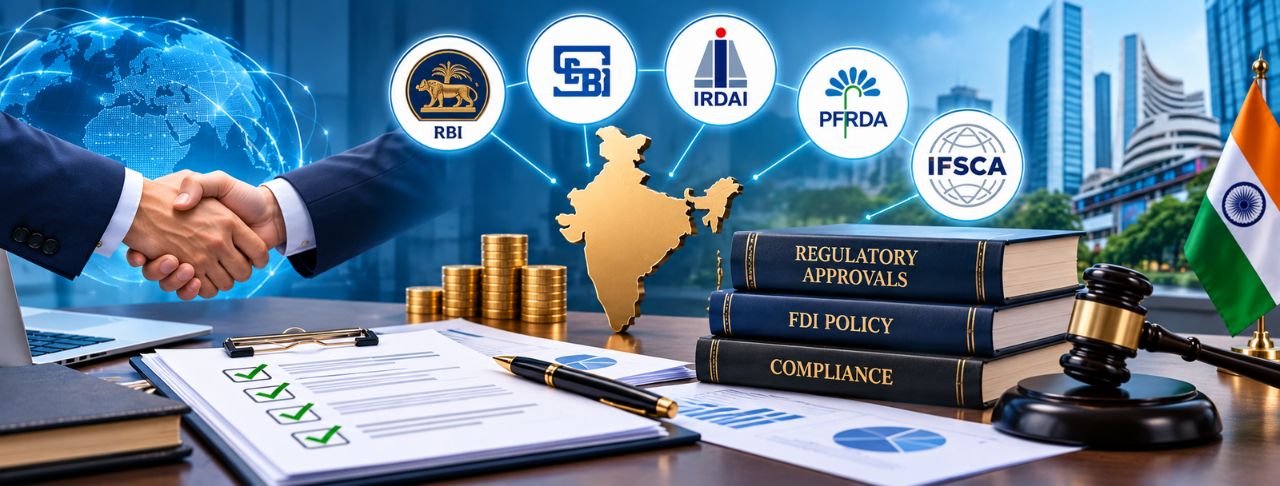
How Can Foreign Investors Structure an Indian Infrastructure Joint Venture?
India's infrastructure sector offers foreign investors opportunities in roads, renewable energy, ports, airports, logistics, water management and urban development. However, infrastructure joint ventures in India require careful planning because projects often involve substantial capital, long development periods, public authorities, land arrangements and sector specific approvals. A suitable joint venture structure can help foreign investors combine international expertise and funding with local knowledge, project access and operational capabilities.
The right structure depends on the project's sector, ownership restrictions, financing requirements, allocation of responsibilities and expected investment period. Investors must consider the Foreign Direct Investment (FDI) Policy, company law, foreign exchange regulations, concession agreements, environmental requirements and contractual risk allocation. The objective is to create a structure which is commercially workable, legally compliant and capable of managing the project throughout its lifecycle.
Choose the Appropriate Joint Venture Structure
A common approach is to establish an Indian private limited company as the joint venture vehicle. The foreign investor and Indian partner subscribe to shares in the company, which becomes responsible for developing, financing or operating the infrastructure project. This structure creates a separate legal entity, supports defined ownership rights and can make it easier to bring in lenders or additional investors.
The parties may also consider a limited liability partnership or a contractual consortium, depending on the project and applicable law. However, an LLP or contractual arrangement may not be suitable for every infrastructure activity, concession or financing structure. The parties should assess whether the project requires a special purpose vehicle (SPV), particularly where the infrastructure asset is developed under a public private partnership or concession arrangement.
Assess FDI Eligibility and Sectoral Conditions
Before agreeing on shareholding, investors should confirm whether foreign investment is permitted in the proposed infrastructure activity and identify the applicable entry route. Many infrastructure sectors permit up to 100% FDI under the automatic route, subject to sector specific conditions. However, rules differ between activities such as construction development, airports, ports, telecoms, power and certain transport services.
The investor should examine the current FDI Policy and the Foreign Exchange Management (Non Debt Instruments) Rules, 2019. It should also review investor nationality and beneficial ownership, including restrictions relating to entities or beneficial owners from countries sharing a land border with India. The permitted route and conditions should be confirmed before funds are committed or shares are issued.
Define Shareholding, Control and Governance Rights
The joint venture agreement should clearly establish the ownership percentages and the rights attached to each shareholding. The parties should consider whether the foreign investor needs a majority stake, an equal partnership or a minority investment with defined protective rights. The chosen arrangement should reflect the investor's capital contribution, technical responsibilities, risk exposure and expected role in management.
Governance provisions should cover board composition, quorum, voting, reserved matters, information rights and dispute escalation. Reserved matters may include changes to the business plan, major borrowing, additional share issues, asset disposals and material contracts. However, veto rights and board appointment arrangements should be reviewed carefully where regulatory rules distinguish between ownership and control. Poorly drafted rights can create uncertainty or affect regulatory approvals.
Allocate Project Responsibilities and Commercial Risks
Infrastructure projects involve different stages, including planning, design, construction, commissioning, operation and maintenance. The joint venture agreement should specify which partner is responsible for each stage. A foreign investor may contribute technology, engineering expertise, project finance or international procurement experience, while the Indian partner may manage local execution, stakeholder engagement and regulatory coordination.
The parties should also agree how cost overruns, construction delays, performance failures, changes in law and force majeure events will be handled. Responsibility for obtaining approvals, managing contractors and meeting project milestones should be clearly allocated. These provisions should align with the project contracts and concession agreement so the joint venture does not assume obligations it cannot realistically perform.
Establish a Project Specific SPV Where Appropriate
A project SPV can separate the infrastructure project from the wider business activities of the foreign investor and Indian partner. The SPV may hold project contracts, obtain financing, employ contractors and receive project revenue. This structure can help lenders assess project cash flows and security arrangements without relying solely on the financial position of the parent companies.
An SPV is particularly relevant for projects involving concessions, public private partnerships and non recourse or limited recourse financing. However, the investor should assess restrictions in the tender documents and concession agreement. Some projects require a specified ownership structure, minimum equity commitment or restrictions on transfers during construction and operation. The SPV's constitutional documents and shareholders' agreement should reflect these obligations.
Review Land, Concessions and Government Contracts
Infrastructure projects may depend on land acquisition, leases, rights of way, licences or concessions granted by central, state or local authorities. Investors should verify the legal basis for the project's land rights and confirm whether the necessary approvals and consents have been obtained. Land title, encumbrances, rehabilitation obligations and access rights can materially affect project feasibility.
Where the project is awarded through a public tender or concession, the investor should review the bidding documents, concession agreement and applicable procurement rules. These documents may regulate minimum promoter shareholding, changes in control, subcontracting, performance security, construction milestones and termination rights. The joint venture should not assume it can freely transfer shares or alter its ownership after award.
Plan Project Financing and Capital Contributions
Infrastructure projects often require substantial funding over several years. The joint venture agreement should define the initial equity commitment, future capital calls, shareholder loans and responsibility for funding overruns. The parties should agree what happens if one shareholder cannot meet a funding obligation, including whether the other shareholder can provide additional capital, receive dilution protection or pursue another contractual remedy.
Foreign investment must comply with FEMA pricing, payment and reporting requirements. External commercial borrowings may also be considered where the proposed borrowing satisfies the applicable RBI framework, including eligible borrower, recognised lender, end use, maturity and reporting conditions. The financing structure should be reviewed alongside lender security requirements, cash flow controls and restrictions under project contracts.
Secure Regulatory and Environmental Approvals
The approvals required depend on the infrastructure sector, location and project design. A power project may require electricity sector permissions and grid connectivity arrangements. A port, airport or road project may involve sector specific approvals, concession requirements and permissions from relevant authorities. Construction and industrial projects may also need environmental clearance, pollution control consents, forest or wildlife permissions and local planning approvals.
The joint venture should prepare an approval matrix identifying the responsible authority, application requirements, expected timeline and conditions attached to each permission. Environmental and social obligations should be assessed early, particularly where the project affects communities, forests, coastal areas or protected locations. The parties should allocate responsibility for obtaining approvals and maintaining compliance throughout construction and operation.
Protect Intellectual Property, Technology and Confidential Information
Foreign investors may contribute proprietary technology, engineering systems, software, technical designs or operating processes. The joint venture documents should specify whether these assets are licensed or transferred, the permitted use, ownership of improvements and rights after termination. The parties should also consider whether technology access depends on ongoing technical support from the foreign shareholder.
Confidentiality, cybersecurity and data management provisions are important where the project uses digital infrastructure, monitoring systems or sensitive operational information. The agreement should address access controls, data ownership, incident response and restrictions on disclosure. Any cross border transfer or processing of personal data should be assessed under applicable Indian data protection requirements.
Plan Deadlock Resolution, Transfers and Exit Rights
Infrastructure joint ventures can continue for many years, making dispute resolution and exit planning essential. The agreement should provide a clear process for resolving board and shareholder deadlocks. This may involve escalation to senior management, expert determination, mediation or arbitration. The parties should also address the consequences of a prolonged deadlock where the project cannot continue under the existing governance structure.
Transfer provisions should deal with lock in periods, rights of first refusal, permitted transfers, tag along rights and drag along rights. The investor must also consider restrictions under the concession agreement, lender documents and sectoral regulations. Exit options may include a sale to the Indian partner, a third party acquisition, a public listing or a permitted transfer after the lock in period. Any exit must comply with FEMA pricing and reporting rules.
Conduct Due Diligence Before Signing
Before committing to the joint venture, the foreign investor should conduct legal, financial, technical and commercial due diligence on the Indian partner and the project. This includes reviewing corporate records, ownership, litigation, tax liabilities, regulatory compliance, land rights, licences, contractor arrangements and the partner's experience in delivering similar projects. The investor should also verify the partner's financial capacity to meet its capital and performance obligations.
A clear due diligence process supports better business investment decisions by identifying risks before they become contractual or operational problems. The parties should document key findings and reflect them in warranties, indemnities, conditions precedent and project milestones. Due diligence should also cover the partner's beneficial ownership and any potential conflicts of interest involving government contracts or project approvals.
Complete Incorporation and Post Investment Compliance
Once the structure is agreed, the parties can proceed with incorporating the Indian joint venture company or establishing the selected project vehicle. Incorporation involves compliance with the Companies Act, 2013, including name approval, constitutional documents, director appointments and statutory registrations. The company should also establish appropriate accounting, tax, employment and governance systems before commencing operations.
The foreign investor and Indian company must complete the applicable FEMA reporting after receiving investment or issuing or transferring shares. This may include Form FC GPR for eligible fresh share issues and Form FC TRS for eligible transfers. The parties should also establish a compliance calendar for annual filings, tax returns, sectoral reporting, environmental obligations and project specific licence conditions. Careful planning for setting up a new company can help ensure the legal structure is ready to receive investment and undertake the project.
Conclusion
A successful Indian infrastructure joint venture requires more than an agreed shareholding structure. Foreign investors should align FDI eligibility, corporate governance, project financing, land and concession rights, environmental approvals and long term exit arrangements. A carefully drafted joint venture agreement, supported by project specific due diligence and a clear compliance plan, can help protect the investment and support effective project delivery
Frequently Asked Questions
Can a foreign investor hold 100% ownership in an Indian infrastructure joint venture?
In several infrastructure sectors, foreign investment up to 100% is permitted under the automatic route, subject to applicable sectoral conditions. The position must be checked for the specific activity and project.
Is an Indian partner mandatory for infrastructure investment in India?
Not always. Many infrastructure activities permit wholly foreign owned Indian subsidiaries. An Indian partner may still be commercially useful or required by particular tender conditions, concession agreements or project arrangements.
Should an infrastructure project have a separate SPV?
A separate SPV is often useful for large projects, concessions and project finance structures. It can ring fence project activities and support lender due diligence, but its ownership and governance must comply with project documents and regulatory conditions.
What approvals are required for an infrastructure joint venture?
Approvals depend on the sector and project location. They may include FDI compliance, environmental clearance, land permissions, construction approvals, sectoral licences, local authority permissions and concession related consents.
Can a foreign investor transfer its shares in an infrastructure joint venture?
A transfer may be possible, subject to FEMA pricing and reporting rules, sectoral conditions, shareholder agreements, lender consent and any lock in or change in control restrictions under the project documents.
What should the joint venture agreement cover?
It should address shareholding, governance, capital contributions, project responsibilities, reserved matters, deadlock resolution, transfer restrictions, warranties, indemnities, dispute resolution and exit rights.
The information contained in this communication is intended solely for the use of the individual or entity to whom it is addressed and others authorized to receive it. This communication may contain confidential or legally privileged information. If you are not the intended recipient, any disclosure, copying, distribution or action taken relying on the contents is prohibited and may be unlawful. If you have received this communication in error, or if you or your employer does not consent to email messages of this kind, please notify the sender immediately by responding to this email and then delete it from your system. No liability is accepted for any harm that may be caused to your systems or data by this message.
OUR CLIENTS







MEDIA COVERAGES
AWARDS & RECOGNITION









AFFILIATIONS & ASSOCIATIONS

MEMBERS OF MSI GLOBAL ALLIANCE

MEMBERS OF ILF
International Law Firms (ILF) Is An International Association Of Independent Smaller And Mid-Sized Law Firms Serving Their Clients’ Needs In Cross Border Business Legal Issues. Our Association With ILF Enables Us To Effectively Assist Clients With Trans-National Legal Issues At Effective Prices.
LIFE AT MHCO















PRACTICE AREA
Private Limited Company Registration in India
Setting up a Company in India
Foreign Direct Investment (FDI) in India
Foreign Business Registration in India
Small Business Registration in India
GET IN TOUCH
Mumbai: Surya Mahal, 2nd Floor 5, Burjorji Bharcha Marg Fort, Mumbai-400 023 India
Contact No.: T: +91-22-40565252
E: contact@mhcolaw.com
Delhi: C-9, Lower Ground Floor Jangpura Extension, New Delhi-110 0014 India
Contact No.: T: +91-11-40196496
E: contact@mhcolaw.com
Contact No.: T: +91-22-40565252
E: contact@mhcolaw.com
Delhi: C-9, Lower Ground Floor Jangpura Extension, New Delhi-110 0014 India
Contact No.: T: +91-11-40196496
E: contact@mhcolaw.com
2025 - MANSUKHLAL HIRALAL & CO.
Need Help? Chat with us