










MSI Is A Global Association Of Over 250 Independent Legal And Accounting Firms In More Than 100 Countries. MSI Has A Successful Track Record Of More Than 25 Years And The Firm Has Recently Been Selected To Represent Mumbai, India.
Please Click Here To See MSI’s Info Graphic Which Highlights Key Facts Of The About. With The Membership At MSI, The Firm Has Now Access To 253 Legal And Accounting Firms Worldwide For Its Clients Who Desire To Do Cross Border Transactions Across The World.
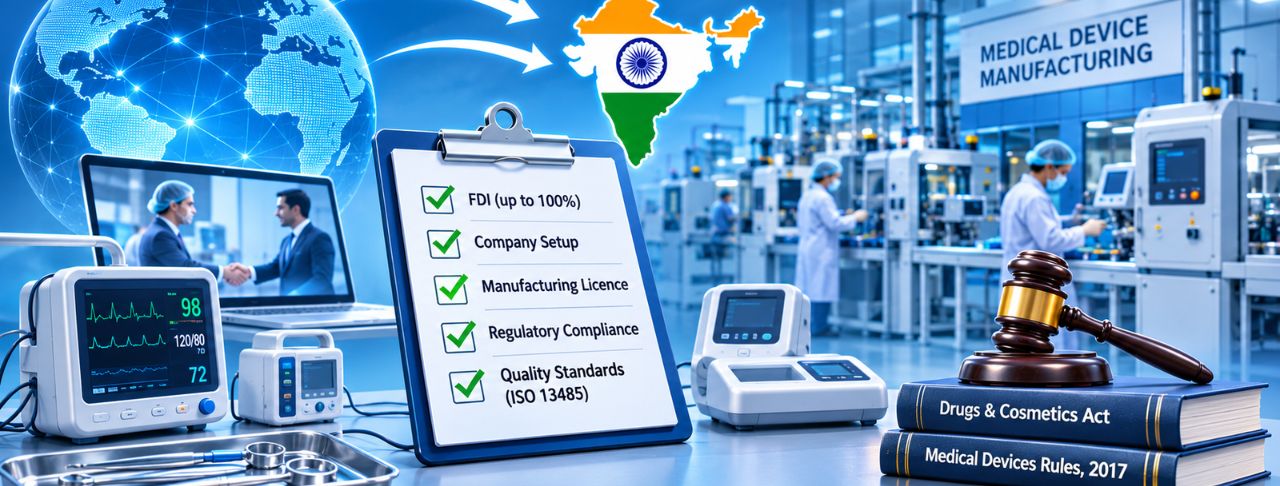
How Can Overseas Medical Device Manufacturers Establish Operations in India Through FDI?
India offers overseas medical device manufacturers opportunities to establish production facilities, acquire existing manufacturing businesses and develop local supply chains. Its healthcare sector creates demand for diagnostic equipment, surgical instruments, implants, monitoring systems and other medical technologies. For international companies considering Medical Device Investment, the key is to understand how foreign direct investment (FDI) rules interact with medical device licensing, manufacturing standards and wider business regulations.India permits up to 100% FDI under the automatic route in medical device manufacturing, subject to applicable laws and conditions. This policy covers both new manufacturing projects and qualifying investments in existing businesses. However, permission to invest does not remove the need for regulatory licences, product compliance, environmental approvals or other operational registrations.Overseas manufacturers should therefore plan their investment and regulatory strategy together. The appropriate structure will depend on the devices being manufactured, the proposed production process, the ownership model and whether the company intends to sell in India, export products or pursue both markets.
Understand India's FDI Policy for Medical Device Manufacturing
The starting point is to establish whether the proposed activity falls within the recognised medical device manufacturing category. India's FDI policy permits up to 100% foreign investment under the automatic route for medical device manufacturing. The policy provides this treatment for both greenfield projects, involving new facilities, and brownfield projects, involving existing operations.
This is important for overseas manufacturers deciding between building a new factory and investing in an Indian producer. A greenfield project may offer greater control over technology, production processes and quality systems. An acquisition or investment in an existing manufacturer may provide access to established facilities, trained employees, supplier networks and customer relationships.The automatic route generally means prior government approval is not required solely for the FDI transaction when the investment qualifies under the applicable policy. It does not mean every transaction can proceed without regulatory checks. The company must still comply with the Foreign Exchange Management Act, the Non Debt Instruments Rules, reporting requirements and any applicable restrictions.The proposed activity also needs careful classification. A company manufacturing medical devices may fall within the specific policy treatment, while a business primarily undertaking pharmaceutical manufacturing, healthcare services, trading or another regulated activity may be subject to a different framework. Where a project combines several activities, the investment structure should reflect the actual business operations.
Choose the Right Indian Business Structure
Overseas manufacturers commonly consider an Indian wholly owned subsidiary, a joint venture with an Indian partner, or an investment in an existing company. Each option has different implications for control, capital allocation, operational responsibility and future expansion.A wholly owned subsidiary may suit a manufacturer seeking direct control over production, intellectual property, quality assurance and commercial strategy. It can enter into local contracts, employ staff, lease or acquire premises where legally permitted, and apply for relevant manufacturing licences. The foreign parent must still ensure its capital contribution and subsequent funding comply with applicable foreign exchange rules.
A joint venture may provide access to local industry knowledge, distribution channels, manufacturing expertise or established relationships with hospitals and suppliers. However, the parties should agree in advance on management rights, reserved decisions, technology access, quality responsibilities, funding obligations and exit arrangements. These issues are especially important where the overseas investor contributes proprietary designs, software or manufacturing processes.Acquiring an existing Indian medical device company may shorten the path to operational readiness, but it requires detailed due diligence. The investor should verify the target's corporate records, licences, product approvals, manufacturing site status, tax position, employee obligations, contracts and history of regulatory complaints or recalls.The business structure should be selected only after assessing the manufacturing activity, proposed ownership, investment route and regulatory requirements. Incorporation alone does not authorise a company to manufacture or market regulated medical devices.
Classify the Medical Devices Before Investing
Medical device regulation in India is principally governed by the Drugs and Cosmetics Act, 1940 and the Medical Devices Rules, 2017. The Central Drugs Standard Control Organisation (CDSCO) administers key aspects of the regulatory framework, alongside State Licensing Authorities where the rules allocate responsibility.Devices are classified according to risk into Class A, Class B, Class C and Class D. Class A represents low risk, while Class D covers high risk. Classification depends on factors such as intended use, invasiveness, duration of contact and other criteria set out in the rules. In vitro diagnostic devices are also subject to applicable classification requirements.
Classification matters because it affects the licensing authority, application pathway, technical documentation and regulatory evidence required. A manufacturer planning to produce low risk accessories may face a different process from one producing implantable devices, critical care equipment or high risk diagnostic products.Before committing capital, the investor should prepare a product list identifying each device, its intended purpose, risk class, manufacturing site and proposed market. The company should also establish whether the product is regulated as a medical device, an in vitro diagnostic device or another category. Software intended for medical purposes and accessories may also fall within the regulatory definition, depending on their function.A clear classification assessment helps determine which approvals are needed before the factory design, production equipment and quality systems are finalised.
Obtain the Required Manufacturing Licence
Foreign investment approval and medical device manufacturing permission are separate matters. An Indian company must obtain the applicable manufacturing licence before undertaking regulated manufacturing activities for sale or distribution.Under the Medical Devices Rules, 2017, applications for manufacturing Class A and Class B devices are generally handled by the relevant State Licensing Authority. Class C and Class D manufacturing applications are generally handled by the Central Licensing Authority. The prescribed application forms, documentation and process depend on the device class and the proposed manufacturing arrangement.The application may require details of the manufacturing premises, technical staff, equipment, product specifications, quality systems and relevant supporting records. The company should also determine whether it will manufacture the device itself or use a loan licence arrangement where permitted under the rules.
Manufacturing plans should account for regulatory lead times. Premises, equipment and production processes need to be appropriate for the devices concerned, and the company should not assume a licence will be issued immediately after incorporation.The investor should also distinguish manufacturing for domestic sale from manufacturing intended for export. Export plans can affect product documentation and commercial arrangements, but they should not be treated as a blanket exemption from applicable Indian manufacturing requirements.
Build a Compliant Quality Management System
Medical device manufacturing requires consistent controls over design, production, testing, traceability and post market monitoring. Under India's regulatory framework, manufacturers must meet the applicable quality management requirements, including requirements set out in the Medical Devices Rules.A quality management system aligned with ISO 13485 is widely used in the medical device sector and is relevant to demonstrating controlled manufacturing processes. The company should determine the precise requirements applicable to its device class and licence pathway rather than assuming certification alone replaces regulatory approval.
The quality system should address supplier qualification, incoming material checks, process validation where required, equipment maintenance, calibration, non conforming products, corrective actions, complaint handling and records. Where devices are software enabled or connected, design controls, cybersecurity and software lifecycle processes may also be important.Quality obligations continue after launch. Manufacturers need processes for investigating complaints, assessing adverse events, handling recalls where necessary and maintaining product traceability. These controls should be built into the operating budget from the outset, rather than added after production begins.
Review Import, Testing and Product Approval Requirements
Many overseas manufacturers initially import components, specialised machinery, software or finished products while developing Indian production capacity. Each category should be assessed separately because import requirements may differ for manufacturing equipment, raw materials, components and finished medical devices.Where finished devices are imported for sale in India, the applicable import licensing framework under the Medical Devices Rules must be assessed. The role of the Indian authorised agent, the overseas manufacturing site, product classification and supporting technical documentation may be relevant to the application.
For locally manufactured products, the company should determine whether testing, performance evidence, clinical investigation or other product specific requirements apply. The need for such evidence depends on the device, its risk class, intended use and regulatory status. New devices and investigational products may be subject to additional requirements.The investor should map the full product lifecycle before launch: design, component sourcing, manufacturing, testing, labelling, distribution, complaint management and any export activity. This can reveal regulatory dependencies before significant capital is spent on equipment or production space.
Assess Factory Site, Environment and Employment Compliance
The selected manufacturing location can materially affect the cost and timing of an investment. Before signing a long term lease or purchasing land, the company should verify permitted land use, building approvals, access to utilities, industrial zoning and the availability of suitable infrastructure.Depending on the process and location, the facility may require consent or authorisation under environmental laws, factory related approvals, fire safety clearance, waste management arrangements and other local permissions. Sterilisation, chemical processing, cleanroom operations and biomedical or hazardous waste handling may trigger additional considerations depending on the activity.
Employment compliance also requires early planning. The company should review applicable labour laws, occupational safety requirements, employee documentation, contractor arrangements and workplace policies. Cleanroom and specialised production environments may require training, access controls and documented hygiene procedures.Site selection should therefore be based on more than land price or proximity to customers. A location with suitable infrastructure, qualified staff, reliable utilities and a realistic approval pathway can reduce operational risk and avoid expensive changes after construction.
Protect Intellectual Property and Structure Technology Transfer
Medical device manufacturing often depends on proprietary designs, engineering specifications, firmware, software, production methods and confidential supplier information. Overseas investors should protect these assets before sharing them with an Indian subsidiary, joint venture partner or contract manufacturer.Technology transfer agreements should clearly identify the intellectual property being licensed, permitted uses, territory, duration, quality obligations, confidentiality requirements and rights to improvements. The parties should also address access to technical records, software updates, regulatory documentation and rights following termination.
Where the Indian business pays royalties or technical service fees to an overseas parent, the company should review transfer pricing, tax withholding and foreign exchange compliance. Intercompany arrangements should be documented and reflect the actual services, rights and responsibilities involved.At this stage, engaging foreign investment consultants may help the investor coordinate the proposed FDI structure with sector specific requirements, funding arrangements and reporting obligations. Legal, regulatory, tax and technical teams should work from the same implementation plan so the commercial structure remains consistent with the licensing strategy.
Plan Funding, Reporting and Ongoing Compliance
The investor should prepare a realistic capital plan covering incorporation, premises, machinery, testing, licensing, staffing, quality systems, working capital and product launch. Medical device projects may take time to reach commercial production, so financial forecasts should include regulatory preparation and validation periods.Foreign capital must be introduced through permitted instruments and channels, with applicable pricing, documentation and reporting requirements observed. The Indian company should coordinate with its authorised dealer bank and professional advisers on the reporting applicable to the specific transaction. Subsequent share issues, transfers or changes in ownership may trigger additional compliance obligations.
Once operations begin, the company must maintain its corporate records, statutory filings, tax compliance, licence conditions and quality documentation. It should also monitor changes to medical device rules, product classifications and applicable standards.For businesses establishing a new Indian entity, a suitable company formation service can assist with incorporation and related registrations. However, the broader implementation plan should also cover licensing, factory readiness, product compliance, tax and foreign investment reporting.
Conclusion
Overseas medical device manufacturers can establish Indian operations through a wholly owned subsidiary, joint venture or acquisition, subject to the applicable legal framework.India's policy permits up to 100% FDI under the automatic route for medical device manufacturing, but investment eligibility is only the first step.A successful project requires early product classification, the correct manufacturing licence, an effective quality management system, suitable premises, appropriate import and testing arrangements, and clear protection for intellectual property. Foreign exchange reporting, tax planning and ongoing regulatory oversight also need attention.The most effective approach is to coordinate investment structuring with regulatory planning before committing major capital. This helps manufacturers choose a viable entry route, prepare the facility correctly and reduce the risk of delays after investment.
Frequently Asked Questions
1. Is 100% FDI permitted in medical device manufacturing in India?
Yes. Up to 100% FDI is permitted under the automatic route for medical device manufacturing, subject to applicable laws, rules and conditions. This treatment generally applies to both greenfield and brownfield manufacturing projects.
2. Does a foreign investor need government approval to establish a medical device factory?
Prior government approval is generally not required solely for a qualifying FDI investment in medical device manufacturing under the automatic route. However, the company must meet applicable foreign exchange, corporate, manufacturing and other regulatory requirements.
3. Can a foreign company manufacture medical devices through an Indian subsidiary?
Yes. An overseas manufacturer can establish an Indian subsidiary, subject to incorporation and applicable investment requirements. The subsidiary must obtain the relevant manufacturing licence and comply with product and quality requirements before undertaking regulated manufacturing for sale or distribution.
4. Which authority issues medical device manufacturing licences in India?
The responsible authority depends on the device class and applicable rules. State Licensing Authorities generally handle manufacturing licences for Class A and Class B devices, while the Central Licensing Authority generally handles Class C and Class D devices.
5. Is ISO 13485 certification mandatory for every medical device manufacturer?
The manufacturer must meet the applicable quality management requirements under the Medical Devices Rules. ISO 13485 is a widely recognised standard in medical device manufacturing, but the company should confirm the precise certification, audit and documentation requirements for its device class and licence pathway.
6. Can a foreign manufacturer acquire an existing Indian medical device company?
Yes. Foreign investment of up to 100% under the automatic route is generally permitted for qualifying medical device manufacturing activities, including brownfield projects. The investor should still conduct due diligence on licences, product approvals, quality records, liabilities and transaction specific compliance requirements.
7. Can a foreign manufacturer import products before starting local manufacturing?
Potentially, yes, subject to the applicable import licensing, product approval and other requirements. The company should distinguish importing finished devices for sale from importing machinery, components or materials for manufacturing, as the relevant obligations may differ
The information contained in this communication is intended solely for the use of the individual or entity to whom it is addressed and others authorized to receive it. This communication may contain confidential or legally privileged information. If you are not the intended recipient, any disclosure, copying, distribution or action taken relying on the contents is prohibited and may be unlawful. If you have received this communication in error, or if you or your employer does not consent to email messages of this kind, please notify the sender immediately by responding to this email and then delete it from your system. No liability is accepted for any harm that may be caused to your systems or data by this message.
OUR CLIENTS







MEDIA COVERAGES
AWARDS & RECOGNITION









AFFILIATIONS & ASSOCIATIONS

MEMBERS OF MSI GLOBAL ALLIANCE

MEMBERS OF ILF
International Law Firms (ILF) Is An International Association Of Independent Smaller And Mid-Sized Law Firms Serving Their Clients’ Needs In Cross Border Business Legal Issues. Our Association With ILF Enables Us To Effectively Assist Clients With Trans-National Legal Issues At Effective Prices.
LIFE AT MHCO











PRACTICE AREA
Private Limited Company Registration in India
Setting up a Company in India
Foreign Direct Investment (FDI) in India
Foreign Business Registration in India
Small Business Registration in India
GET IN TOUCH
Mumbai: Surya Mahal, 2nd Floor 5, Burjorji Bharcha Marg Fort, Mumbai-400 023 India
Contact No.: T: +91-22-40565252
E: contact@mhcolaw.com
Delhi: C-9, Lower Ground Floor Jangpura Extension, New Delhi-110 0014 India
Contact No.: T: +91-11-40196496
E: contact@mhcolaw.com
Contact No.: T: +91-22-40565252
E: contact@mhcolaw.com
Delhi: C-9, Lower Ground Floor Jangpura Extension, New Delhi-110 0014 India
Contact No.: T: +91-11-40196496
E: contact@mhcolaw.com
2025 - MANSUKHLAL HIRALAL & CO.
Need Help? Chat with us