












MSI Is A Global Association Of Over 250 Independent Legal And Accounting Firms In More Than 100 Countries. MSI Has A Successful Track Record Of More Than 25 Years And The Firm Has Recently Been Selected To Represent Mumbai, India.
Please Click Here To See MSI’s Info Graphic Which Highlights Key Facts Of The About. With The Membership At MSI, The Firm Has Now Access To 253 Legal And Accounting Firms Worldwide For Its Clients Who Desire To Do Cross Border Transactions Across The World.
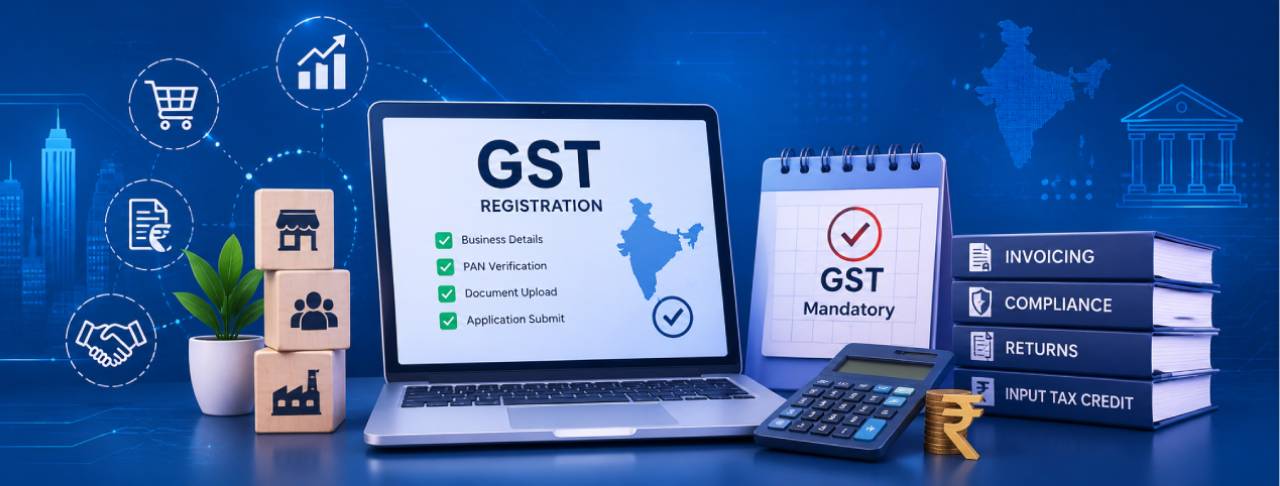
GST Registration for New Businesses in India: When and Why It Matters
Starting a business in India involves several legal and regulatory obligations, one of the most important being GST Registration. Many entrepreneurs assume registration becomes relevant only after achieving substantial revenue, but the law prescribes specific situations where registration is mandatory regardless of turnover. Understanding when GST registration is required and how it benefits a business helps entrepreneurs remain compliant while building credibility in the marketplace. Whether you are launching a startup, opening an online business or expanding into multiple states, obtaining GST registration at the right stage can prevent penalties and support long term business growth.
Beyond legal compliance, GST registration allows businesses to participate confidently in the formal economy, claim eligible tax credits and establish stronger commercial relationships with customers and suppliers.
Understanding GST
Goods and Services Tax, commonly known as GST, is India's unified indirect tax system introduced to simplify taxation across the country. GST replaced multiple indirect taxes with a comprehensive tax structure governing the supply of goods and services. Businesses registered under GST collect tax on taxable supplies, file periodic returns and comply with prescribed record keeping requirements. The system promotes transparency while improving tax administration.
Why GST Registration Matters for New Businesses
For every growing enterprise, GST Registration is more than a statutory formality. It demonstrates regulatory compliance, improves commercial credibility and enables participation in organised business transactions. Businesses registered under GST can issue tax invoices, claim eligible input tax credit and work with larger corporate customers who often prefer dealing with registered suppliers. Early compliance also reduces future legal complications.
When GST Registration Becomes Mandatory
GST registration is compulsory under several circumstances prescribed by law. Registration requirements depend upon factors such as turnover, business activities and geographical operations. Businesses should carefully evaluate whether mandatory registration applies before commencing commercial operations. Waiting until after receiving a regulatory notice may result in unnecessary penalties. Current threshold limits and eligibility conditions are available on the Goods and Services Tax Portal.
Businesses Required to Register Regardless of Turnover
Certain businesses require GST registration irrespective of annual turnover. Examples include businesses involved in:
- Interstate taxable supplies in specified situations
- Electronic commerce operations where applicable
- Certain categories of online sellers
- Casual taxable persons
- Non resident taxable persons
Entrepreneurs should examine the nature of their business carefully before assuming registration is unnecessary.
Voluntary GST Registration
Many businesses choose voluntary registration even where it is not legally compulsory. Voluntary registration may provide several commercial advantages. Registered businesses often appear more credible to customers, vendors and institutional clients. It also allows access to input tax credit subject to applicable conditions. Voluntary compliance supports long term business expansion.
Benefits of GST Registration
GST registration offers several operational and financial advantages.
Important benefits include:
- Legal compliance
- Input tax credit eligibility
- Improved business credibility
- Access to larger commercial opportunities
- Simplified tax structure
- Enhanced transparency
These benefits become increasingly valuable as businesses grow.
Input Tax Credit
One of the most significant advantages of GST registration is the availability of input tax credit. Eligible businesses may claim credit for GST paid on purchases used in business operations, subject to statutory conditions. This mechanism reduces cascading taxation and improves cost efficiency. Maintaining proper documentation remains essential for claiming tax credit.
Business Credibility
Corporate clients, government entities and institutional buyers often prefer working with GST registered suppliers. Registration signals compliance, professionalism and operational maturity. For startups seeking investment or commercial partnerships, regulatory compliance enhances credibility. Customers also gain confidence when dealing with compliant businesses.
Interstate Business Operations
Businesses supplying goods or services across state boundaries should carefully examine GST requirements. Interstate transactions often involve specific compliance obligations. Entrepreneurs planning national expansion should evaluate registration requirements before entering new markets. Early planning simplifies future growth.
GST Registration During Business Formation
Entrepreneurs completing company incorporation in india should evaluate GST obligations immediately after incorporation. Although registration requirements depend upon business activities and statutory conditions, considering GST compliance early prevents operational delays. Businesses prepared from the outset generally scale more efficiently.
Documentation Required
GST registration typically requires supporting documentation relating to the business and its authorised representatives. Common documents include:
- PAN
- Identity proof
- Address proof
- Business registration documents
- Bank account details
- Authorisation documents where applicable
Accurate documentation facilitates faster processing.
GST Compliance After Registration
Obtaining registration is only the beginning. Registered businesses must comply with ongoing obligations including:
- Timely return filing
- Tax payment
- Invoice compliance
- Record maintenance
- Reconciliation of financial records
Regular compliance reduces regulatory risks and financial penalties.
Maintaining Proper Records
Businesses should maintain organised records relating to:
- Sales invoices
- Purchase invoices
- Tax payments
- Credit notes
- Debit notes
- Financial statements
Proper documentation supports accurate return filing while simplifying audits. Digital record management also improves operational efficiency.
Consequences of Non Compliance
Businesses failing to comply with GST requirements may face:
- Monetary penalties
- Interest on unpaid taxes
- Regulatory notices
- Restrictions on input tax credit
- Litigation in serious cases
Preventive compliance remains considerably less expensive than resolving tax disputes. Regular professional review helps businesses remain compliant.
GST and Digital Businesses
Digital commerce has increased the importance of GST compliance. Online sellers, technology businesses and service providers should carefully evaluate applicable registration requirements before commencing operations. E commerce transactions often involve specialised compliance obligations. Professional advice may become particularly valuable for digital enterprises.
Professional Assistance
Although GST registration has become increasingly streamlined, businesses often benefit from professional guidance. Experienced tax advisors assist with:
- Eligibility assessment
- Documentation
- Registration
- Return filing
- Ongoing compliance
- Regulatory updates
Professional support reduces compliance risks while improving efficiency.
GST Compliance During Business Expansion
Businesses undertaking business setup in india across multiple locations should regularly review their GST obligations as operations expand. Changes in turnover, geographical reach or commercial activities may affect compliance requirements. Periodic compliance reviews support uninterrupted business growth.
Importance of Regular Compliance Reviews
Tax laws continue evolving through amendments, notifications and judicial interpretation. Businesses should periodically review compliance procedures to ensure continued adherence to applicable requirements. Internal compliance systems help organisations identify issues before they become regulatory concerns. Consistent review supports long term legal certainty.
Conclusion
GST Registration plays a vital role in establishing a legally compliant and commercially credible business in India. Beyond meeting statutory requirements, registration strengthens business reputation, facilitates tax efficiency and supports long term growth. Entrepreneurs should evaluate GST obligations during the earliest stages of business planning rather than waiting until operations expand. Timely registration, organised documentation and ongoing compliance create a solid regulatory foundation, allowing businesses to operate confidently while focusing on sustainable growth.
Frequently Asked Questions (FAQs)
Q1. What is GST registration?
GST registration is the process through which eligible businesses obtain registration under the Goods and Services Tax system to collect and remit GST.
Q2. Is GST registration mandatory for every business?
No. Registration depends upon statutory thresholds, business activities and other legal conditions.
Q3. Can a startup voluntarily obtain GST registration?
Yes. Eligible businesses may apply voluntarily even where registration is not compulsory.
Q4. What are the benefits of GST registration?
Benefits include legal compliance, input tax credit eligibility, improved credibility and better commercial opportunities.
Q5. Does GST registration require regular return filing?
Yes. Registered businesses must comply with prescribed return filing and tax payment obligations.
Q6. Why should businesses obtain professional advice?
Professional guidance helps businesses understand eligibility, maintain compliance and avoid regulatory issues.
The information contained in this communication is intended solely for the use of the individual or entity to whom it is addressed and others authorized to receive it. This communication may contain confidential or legally privileged information. If you are not the intended recipient, any disclosure, copying, distribution or action taken relying on the contents is prohibited and may be unlawful. If you have received this communication in error, or if you or your employer does not consent to email messages of this kind, please notify the sender immediately by responding to this email and then delete it from your system. No liability is accepted for any harm that may be caused to your systems or data by this message.
OUR CLIENTS







MEDIA COVERAGES
AWARDS & RECOGNITION









AFFILIATIONS & ASSOCIATIONS

MEMBERS OF MSI GLOBAL ALLIANCE

MEMBERS OF ILF
International Law Firms (ILF) Is An International Association Of Independent Smaller And Mid-Sized Law Firms Serving Their Clients’ Needs In Cross Border Business Legal Issues. Our Association With ILF Enables Us To Effectively Assist Clients With Trans-National Legal Issues At Effective Prices.
LIFE AT MHCO















PRACTICE AREA
Private Limited Company Registration in India
Setting up a Company in India
Foreign Direct Investment (FDI) in India
Foreign Business Registration in India
Small Business Registration in India
GET IN TOUCH
Mumbai: Surya Mahal, 2nd Floor 5, Burjorji Bharcha Marg Fort, Mumbai-400 023 India
Contact No.: T: +91-22-40565252
E: contact@mhcolaw.com
Delhi: C-9, Lower Ground Floor Jangpura Extension, New Delhi-110 0014 India
Contact No.: T: +91-11-40196496
E: contact@mhcolaw.com
Contact No.: T: +91-22-40565252
E: contact@mhcolaw.com
Delhi: C-9, Lower Ground Floor Jangpura Extension, New Delhi-110 0014 India
Contact No.: T: +91-11-40196496
E: contact@mhcolaw.com
2025 - MANSUKHLAL HIRALAL & CO.
Need Help? Chat with us